
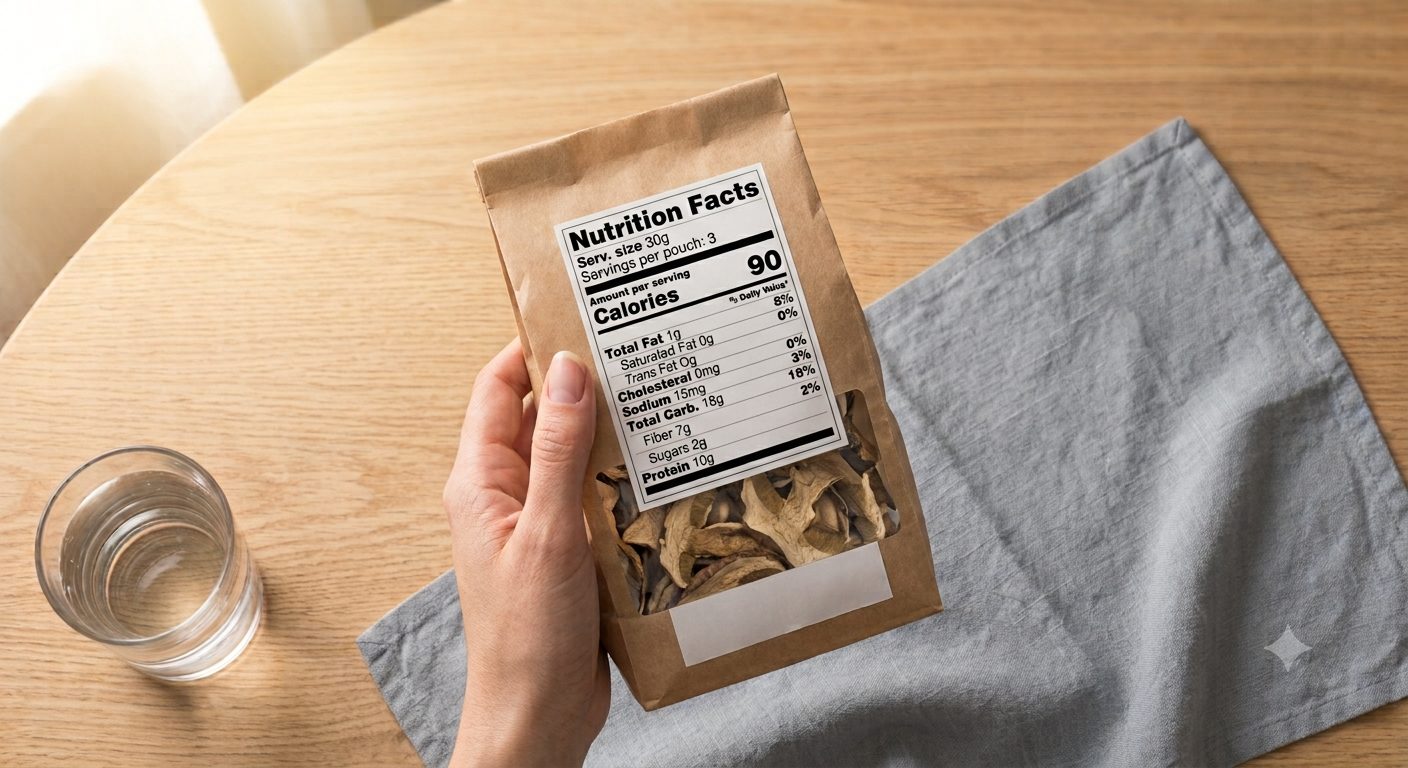
How to read nutrition labels so marketing doesn't fool you
“No added sugar,” “light,” “organic,” “0% fat” — store shelves are full of labels that sound healthy but often say less than they seem. Knowing how to correctly read the nutrition label on the back of a product — not just the slogan on the front — is one of the most useful skills for anyone who wants to control their diet without memorizing complicated rules.
Where to look, exactly
The standard nutrition label (mandatory in the EU) shows values per 100 g or 100 ml, and sometimes per serving too. The efficient reading order:
1. The reference serving size. This is the first trap — many products list values for an unrealistically small serving, making the product seem less caloric than it actually is when you consume the whole thing.
2. The ingredient list. Ingredients are listed in descending order of quantity. If sugar (or a synonym for it) appears in the first 3 positions, the product is predominantly sugar, regardless of what the front of the package says.
3. Total sugar and “of which sugars.” There’s no strict legal distinction between “natural” sugar (from fruit, dairy) and added sugar on the standard Romanian/EU label — but the ingredient list tells you the source.
4. Fiber. A food with over 3 g fiber per 100 g is considered a “source of fiber”; over 6 g, “high in fiber.” See also the complete fiber guide.
5. Protein. Check the protein-to-calorie ratio — a product with many calories but little protein doesn’t efficiently contribute to your daily protein needs.
Sugar synonyms to recognize
Manufacturers sometimes avoid the word “sugar” using technical terms that sound less alarming, but are still forms of added sugar: glucose-fructose syrup, maltodextrin, dextrose, corn syrup, fruit juice concentrate, barley malt, invert sugar, sucrose. If you see several of these in the same ingredient list, the actual amount of added sugar is probably higher than the “sugar” label alone suggests.
Marketing labels and what they really mean
“Light” — usually means at least 30% fewer calories or fat than the standard version of the same product, not necessarily that the product is “healthy” in absolute terms. A light yogurt can still have significant added sugar to compensate for taste.
“No added sugar” — doesn’t mean “no sugar.” Fruits contain natural sugar (fructose), so a juice “with no added sugar” can still have 20+ g sugar per 100 ml, just from natural sources.
“0% fat” — often compensated with added sugar or starch to preserve taste and texture, so it’s not automatically lower calorie than the regular version.
“Organic” — refers to the production method of ingredients (no synthetic pesticides, chemical fertilizers), not the degree of processing or caloric content. An organic ultra-processed product is still ultra-processed.
“Natural” — a term without a strict legal definition in most contexts, frequently used just as a marketing argument.
“No E-numbers” — many E-numbers are harmless vitamins or preservatives (vitamin C is E300). Their absence doesn’t automatically guarantee a healthier product.
How to quickly compare two similar products on the shelf
Basic rule: compare at the same quantity (100 g or 100 ml), not per serving, because servings differ between brands and can mask real differences.
Prioritize in this order for a basic product (bread, yogurt, cereal):
- Few, recognizable ingredients
- Minimal added sugar
- As much fiber as possible
- As much protein as possible relative to calories
For products labeled “protein” or “fitness”: always check the sugar — many “protein” bars and shakes have sugar content similar to regular sweets, offset by protein-focused marketing.
The “mental math” trap with large servings
Many products (chips, cookies, juices) list values per 100 g, but the package contains 200-300 g. Without doing the math, you underestimate real calories consumed by 2-3x. A 150 g bag of chips with “500 kcal per 100g” on the label means 750 kcal consumed if you eat the whole bag — the equivalent of a full meal.
A practical example: what a good label looks like vs. a misleading one
Good yogurt: milk, live bacterial cultures. That’s it. 4-5 g sugar per 100 g (natural, from lactose), 4-5 g protein.
Yogurt with misleading marketing: milk, sugar, glucose-fructose syrup, flavors, modified starch, colorings, sweeteners. 12-15 g sugar per 100 g, similar protein to the plain version, but many more empty calories.
The difference isn’t visible from the front label — both can say “with fruit” or “natural” — only from the ingredient list on the back.
Frequently asked questions
How long does it take to efficiently read a label?
With practice, 10-15 seconds per product — you look at the ingredient list (first 3-4) and at sugar/fiber/protein per 100 g. It becomes automatic after a few weeks of habit.
Are barcode-scanning apps reliable?
Many are useful as a starting point, but always check the physical label for accuracy — databases can have outdated or incorrect information for products specific to the Romanian market.
Is it worth paying more for a product with a “cleaner” label?
Depends on budget and priorities, but for frequently consumed staple foods (bread, dairy, cereal), a short ingredient list is often a good quality indicator, regardless of price.
Are all products with many ingredients bad?
Not automatically — some complex products (for example, a nut and dried fruit mix) have longer lists for legitimate reasons. What matters is what the ingredients are, not just how many.
Reading a nutrition label correctly is a skill that trains quickly and gives real control over food choices, beyond the marketing slogans on the front of the package.
⚕️ The information in this article is for educational purposes and does not replace the advice of a doctor or nutritionist.