

Keto vs Paleo: what's the difference and which one helps you lose weight faster
Keto and paleo are often lumped together — both cut sugar, both have aggressive fans, and both promise weight loss and health. But they are fundamentally different diets, with distinct rules, mechanisms, and challenges. If you’re thinking about starting one of them, it’s worth understanding exactly how they differ, so you choose based on knowledge, not based on what’s trending on TikTok.
Let’s put them side by side: what you eat on each, what sets them apart, and the answer to the question everyone asks — which one helps you lose weight faster.
What each diet is, in brief
Keto (ketogenic) is a diet built around macronutrients: very few carbohydrates (under ~50 g per day), moderate protein, and lots of fat. The goal is to enter ketosis, a state in which the body burns fat instead of glucose. What matters is how few carbs you eat, not necessarily where they come from.
Paleo (the paleolithic diet, or “caveman diet”) is a diet built around types of food, not macronutrients. The idea: you only eat what a prehistoric human could have hunted or gathered — meat, fish, eggs, vegetables, fruits, nuts, seeds. You exclude everything “modern”: grains, dairy, legumes, sugar, and processed foods. You can eat a fair number of carbs on paleo (from fruit, sweet potatoes), so you don’t necessarily enter ketosis.
The essential difference, in one sentence
Keto counts grams of carbohydrates; paleo counts the food’s “generations.” On keto you can eat processed bacon as long as it fits your carb limit — on paleo, you can’t, because it’s processed. On paleo you can eat a bowl of fruit and sweet potato — on keto, you can’t, because they have too many carbs. They’re different philosophies that happen to overlap in the middle (both cut sugar and processed food).
What you eat and what you avoid on each
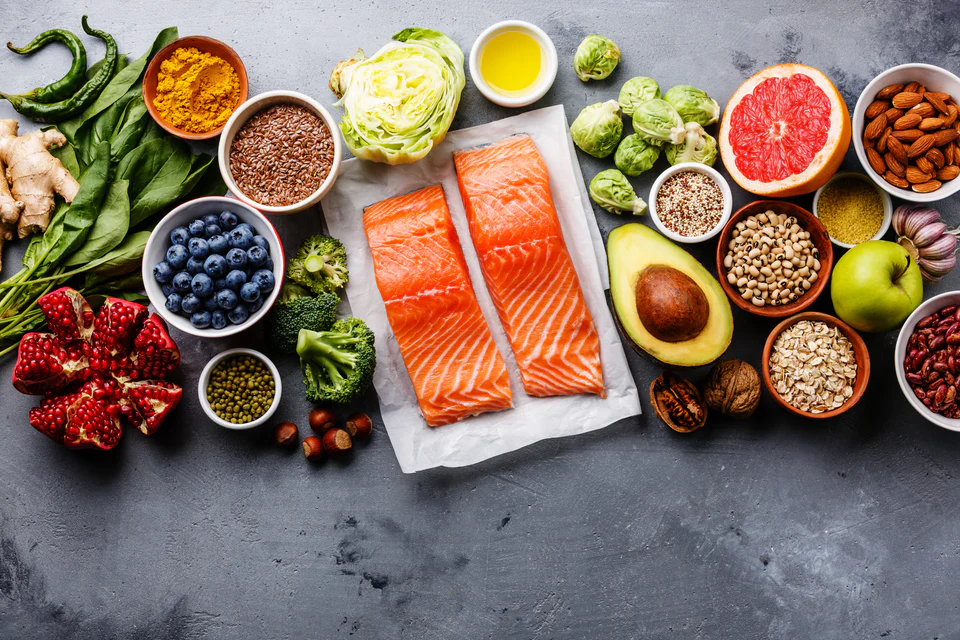
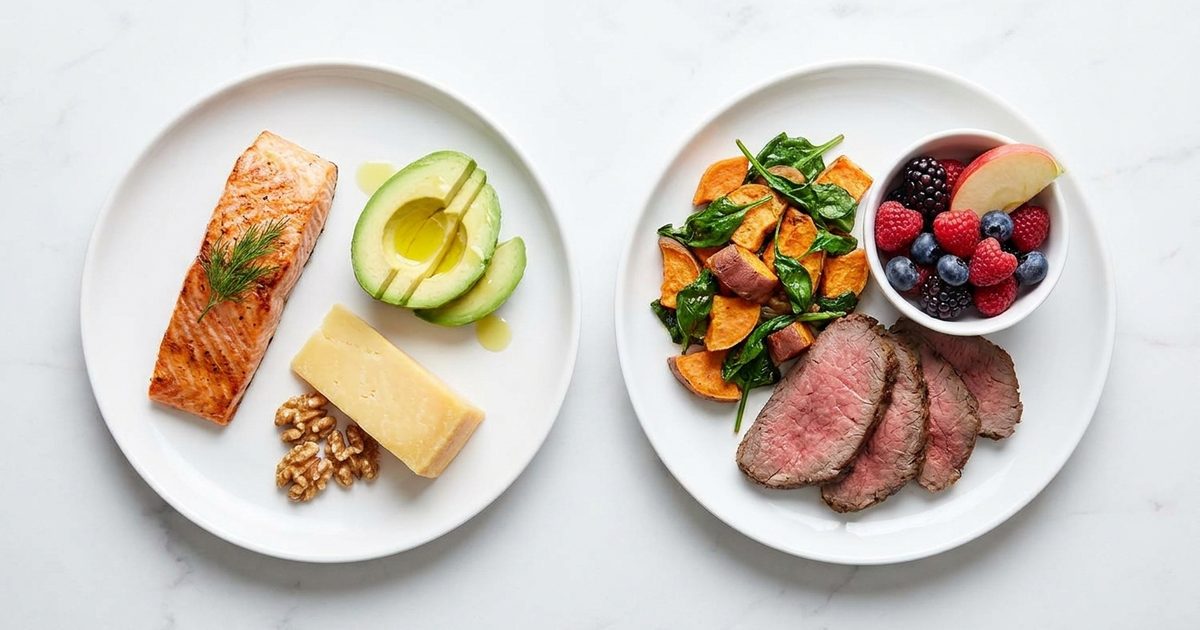
Allowed on both: meat, fish, eggs, green vegetables, nuts, olive oil, avocado.
Paleo only (not keto): fruit in larger quantities, sweet potatoes, honey, bananas — natural foods but rich in carbohydrates.
Keto only (not paleo): fatty dairy (cheese, cream, butter), sometimes processed low-carb foods — as long as they fit within the carb budget.
Banned on both: sugar, white bread, pasta, processed sweets.
Banned on paleo, but allowed on keto: dairy and legumes (though legumes have too many carbs for keto too).
Which one helps you lose weight faster?
The question everyone asks — and the answer disappoints everyone hoping for magic: neither is intrinsically faster. Both work for the same reason: they make you consume fewer calories. By cutting entire categories of food (sugar, processed food, carbs on keto), you naturally end up in a calorie deficit without counting anything.
Keto seems to produce faster weight loss in the first week, but it’s an illusion: the initial big drop is water, released when you deplete your carb reserves. Once the water effect passes, both diets produce the same real weight loss of 0.5–1 kg per week, if the calorie deficit is similar.
What truly matters is not which one “burns more,” but which one you can stick to. And that differs from person to person: some find it easier to give up bread and pasta (paleo), others find it easier to eat cheese and satiating fats without fruit (keto).
Pros and cons, in brief
Keto — advantage: strong satiety from fat, useful for those who have big sugar cravings. Disadvantage: strict restriction, “keto flu” at the start, hard to stick to socially (no fruit, no potatoes, no bread at all).
Paleo — advantage: more flexible, includes fruit and more variety, emphasis on unprocessed food. Disadvantage: excluding dairy and legumes (cheap protein sources) can be unnecessarily strict and more expensive.
See the full details in the diet library: keto diet and paleo diet.
Frequently asked questions
Which is healthier, keto or paleo?
Paleo is generally more balanced long-term, because it includes fruit and more variety. Keto is more restrictive and harder to maintain, but can be useful for certain objectives. Neither is “the healthiest” for everyone — it depends on the individual.
Can I combine keto with paleo?
Yes, there is “keto-paleo” — you eat paleo (no grains, no dairy, no processed food) but also very few carbs (no sweet fruit, no potatoes). It is even more restrictive, and therefore even harder to sustain.
Which produces faster weight loss in the long term?
Neither. In the long term, you lose weight at the same rate on both, if you maintain the same calorie deficit. The real difference is how well each fits your lifestyle.
Do I have to follow one of them to lose weight?
No. You can lose weight without cutting entire food categories, simply by controlling portions and calories. Keto and paleo are just two methods of achieving a deficit — useful for those who prefer clear rules instead of counting calories.
Which is easier to stick to socially (at restaurants, at events)?
Paleo is generally easier to manage away from home, because it includes more foods — you can order a steak with vegetables and fruit without issue. Keto is harder socially: you need to avoid bread, side dishes, many sauces, and almost all desserts, which can be frustrating at restaurants or events.
Can I follow keto or paleo if I exercise a lot?
It’s possible, but it depends. Endurance sports and intense effort use a lot of glycogen from carbohydrates, and keto, being very low in carbs, can reduce performance in some athletes, especially at the start. Paleo allows more carbs (from fruit, sweet potatoes), so it’s generally friendlier to intense training. If you train seriously, talk to a specialist first.
The honest conclusion: don’t choose between keto and paleo based on which “burns more,” because both lead to the same place. Choose based on which feels sustainable long-term — or, if neither appeals to you, remember that a simple calorie deficit, without dramatic restrictions, works just as well. The best diet of all is not the one with the most impressive name, but the one you can sustain for months without feeling punished. For some that’s keto, for others paleo, and for most, a balanced approach without extremes.
⚕️ This information is for educational purposes only and does not replace the advice of a doctor or nutritionist. Restrictive diets are not suitable for everyone — consult a specialist before starting.