

Balanced
Caloric Deficit Diet (Calorie Counting)
You consume fewer calories than you burn, without banning any food — the common mechanism behind all diets.
Losing weight through a caloric deficit is, in fact, the principle behind every diet that works: you consume fewer calories than you burn. Instead of banning foods, this approach simply asks you to stay below your daily needs, leaving you free to choose what you eat.
The advantage is total flexibility and the fact that it teaches you about portions and balance. The disadvantage is the effort of weighing and tracking, especially at the start. You can estimate your needs with the calorie calculator and begin with a moderate deficit.
History and origin
The concept of caloric deficit as the mechanism of weight loss belongs to thermodynamics applied to nutrition, formalised gradually in the first half of the twentieth century as food chemistry and digestive physiology advanced. Max Wishnofsky published in 1958 in the American Journal of Clinical Nutrition what became the canonical rule for the following decades: 3,500 kilocalories equate to approximately 0.45 kg of body fat. This rule dominated dietary guidelines and medical counselling for more than fifty years.
Researchers in the second half of the twentieth century continually refined the model, adding variables related to body composition, the type of tissue lost and metabolic adaptation. Kevin Hall and colleagues at the National Institutes of Health (NIH) developed dynamic equations accounting for the fact that caloric needs change as weight decreases, explaining why the same deficit does not produce the same loss over time.
Today, the notion of caloric deficit remains the central principle recognised in nutrition for weight loss, regardless of the diet applied. Current debate focuses not on the validity of the deficit as a mechanism, but on the factors influencing long-term adherence: satiety, food composition, hormones and the food environment.
+ What you eat and what you avoid
✓ What you eat
- Any food, within your daily calorie budget
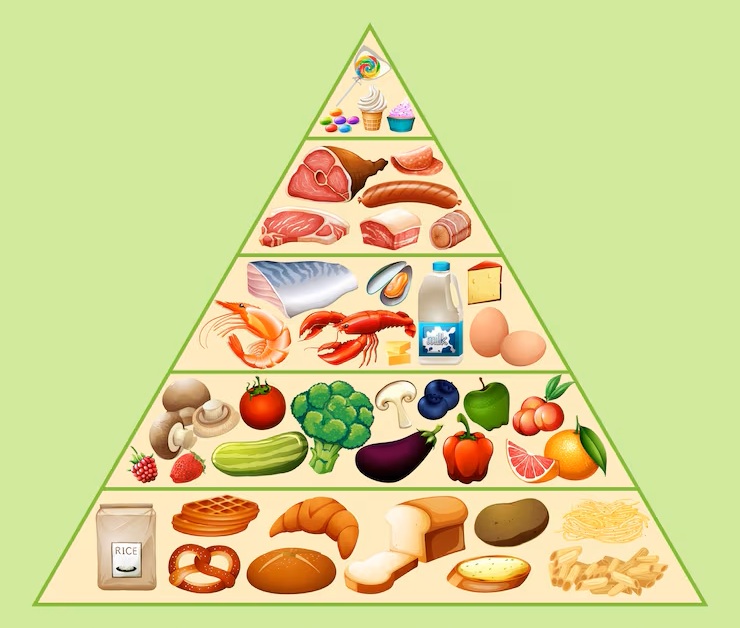
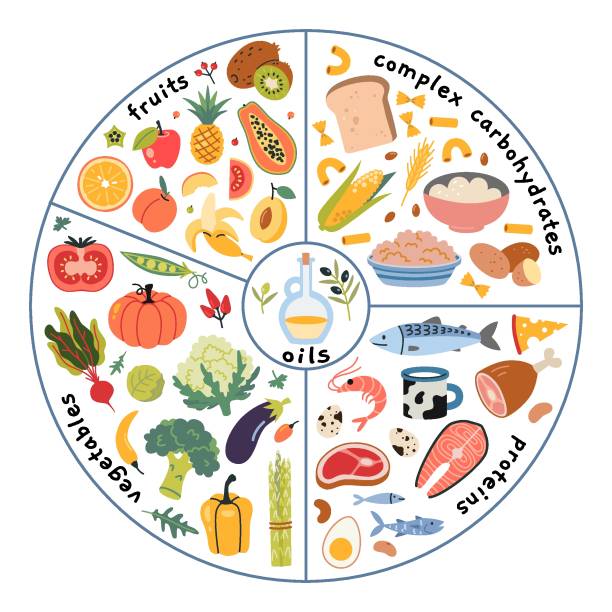
- Focus on filling foods: protein, vegetables, fibre
✕ What you avoid
- Caloric excess
- Empty calories (sugar, sweetened drinks, alcohol) in excess
+ Sample one-day menu
+ Pros and cons
Pros
- Flexible — no food is off-limits
- Works regardless of your dietary style
- Teaches you about portions and balance
Cons
- Requires weighing and tracking, at least at first
- Can become mentally tiring
- Calorie estimates can be inaccurate
+ ⚠️ Who should avoid this diet
- History of eating disorders (counting can be triggering)
Indicative list. Before starting any diet, especially if you have a medical condition, consult a doctor or nutritionist.
Întrebări frecvente
How many calories should I cut to lose weight?
A deficit of 300–500 kcal per day below your needs (TDEE) leads to weight loss of roughly 0.3–0.5 kg per week. You can find your needs with the calorie calculator.
Do only calories matter?
For weight loss, the caloric deficit is the decisive factor. But food quality matters for satiety, energy and health — which is why emphasising protein, vegetables and fibre helps.