
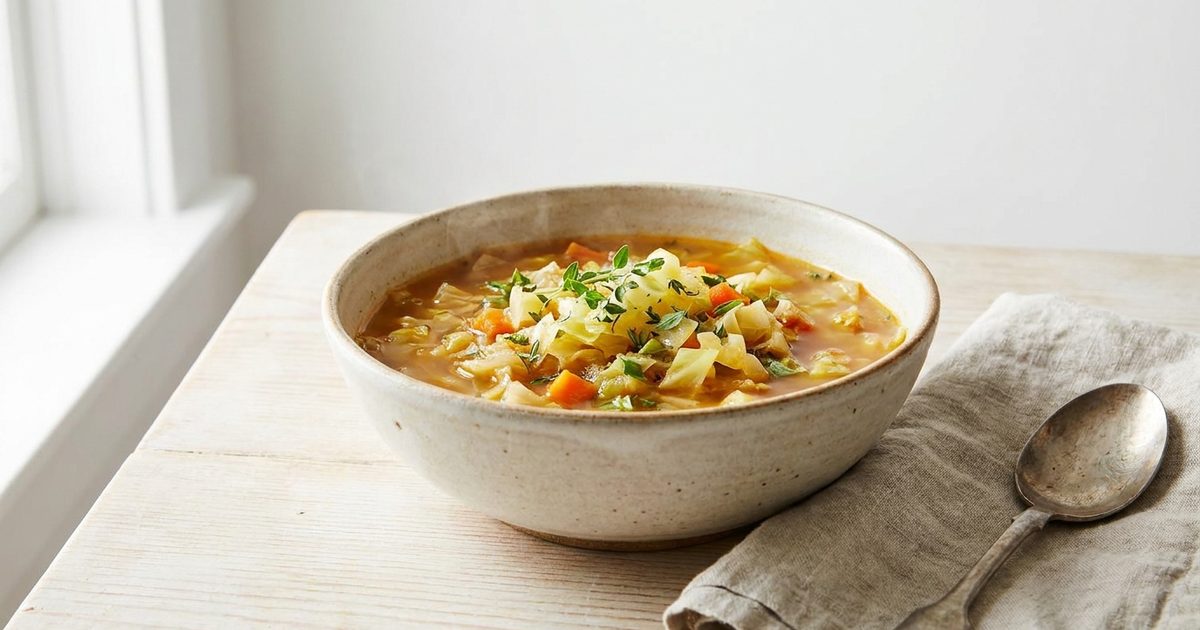
Cabbage soup diet: how it works, the recipe, and what not to expect
The cabbage soup diet is one of the oldest and most enduring fad diets. It has circulated for decades, passed by word of mouth and from magazine to magazine, with the same promise: eat as much cabbage soup as you want for a week and lose 4–7 kilograms. The interesting part is that it doesn’t lie completely — you really do lose weight quickly. The part nobody tells you is what those kilograms actually are, and what happens to them afterwards.
Let’s look at the classic recipe, why it works short-term, and why it’s not a solution you can maintain for more than a few days.
How it works, for real
The secret of the cabbage soup diet is not the cabbage and not any property that “burns fat.” The secret is much more mundane: it’s an extremely low-calorie diet. A large bowl of cabbage soup with vegetables has somewhere around 50–100 calories. You can eat three or four bowls and still be under 400 calories from soup. Adding the diet’s rules (some fruit, vegetables, a little protein on certain days), you end up with a very low daily total.
In other words, you lose weight because you’re in a huge calorie deficit, not because cabbage has special powers. You’d achieve the same result from any food that is equally low in calories. The myth that “cabbage burns fat” or that it has “negative calories” (meaning you’d burn more calories chewing it than it contains) is false — no food has negative calories.
The classic cabbage soup recipe
There are dozens of variations, but the base is the same. You need:
- one medium cabbage, shredded,
- 2–3 onions,
- a few peppers,
- 2–3 tomatoes (or a can of tomatoes),
- a few carrots,
- a bunch of celery or parsley,
- optionally, a vegetable stock cube for flavour.
Sauté the onion briefly, add the remaining vegetables and enough water to cover, then cook until soft (20–30 minutes). Season with salt, pepper, basil — whatever herbs you like. That’s it. It’s an ordinary, inexpensive, filling vegetable soup that is genuinely healthy in itself.
Why the kilograms come back (the part ads hide)
Here’s the uncomfortable truth. Of the 4–7 kilograms you see on the scale after a week, most are water, not fat. When you eat so few carbohydrates and so little salt, the body releases the water it had bound to glycogen reserves. The scale drops dramatically, you’re pleased — and then, when you return to normal eating, the water comes back too, often within days.
Real fat loss in a week cannot physically exceed 0.5–1 kg, regardless of how drastically you eat. The rest is water and intestinal content. That’s why the cabbage soup diet is classified as an “impulse” diet — useful at best as a starter or to “deflate” before an event, but not a method of lasting weight loss.
There’s also another aspect: kept up for more than 5–7 days, it becomes a problem. It’s low in protein and healthy fats, it leaves you without energy, it can give you headaches, and because it’s so monotonous, almost nobody can tolerate it for more than a week. See the structured version in our diet library: cabbage soup diet.
How to use cabbage soup intelligently
The good news is that cabbage soup genuinely has a good place in a weight loss diet — just not as an exclusive diet. Used smartly, it’s an excellent tool:
- As a first course at a meal. A bowl of cabbage soup before the main course fills you up with very few calories, so you naturally eat less of the rest of the meal.
- As a filling snack. Instead of something caloric between meals, a warm bowl of soup kills hunger for almost nothing.
- As a light evening meal, alongside a protein source (an egg, chicken breast, cottage cheese), so it doesn’t remain just vegetables.
This way you benefit from the soup’s high volume and low calories, without starving yourself and without the yo-yo effect of the one-week diet.
Frequently asked questions
How many kilograms do you lose with the cabbage soup diet?
On the scale, usually 3–5 kg in a week — but the vast majority is water, not fat. The real fat loss is much smaller and largely comes back when you return to normal eating.
Is the cabbage soup diet healthy?
The soup itself is healthy and inexpensive. The exclusive diet, kept up for more than a few days, is not — it’s too low in protein and fats, leaves you without energy, and is unsustainable.
Can I keep the diet for more than a week?
It’s not recommended. Most versions are designed for a maximum of 7 days, precisely because they’re nutritionally imbalanced. It’s better to integrate soup into a normal diet long-term.
Does cabbage really have “negative calories”?
No. The concept of “negative calories” is a myth. Cabbage is very low in calories, which is useful, but it doesn’t make you burn more than it contains.
Why do I feel without energy on the cabbage soup diet?
Because it’s very low in calories, protein, and fats — all of which are needed for energy and normal bodily function. After a few days of such a low intake, fatigue, headaches, and irritability are common. It’s one of the reasons it’s not designed for more than a week and why active people cannot maintain it.
Can I add meat to cabbage soup?
Yes, and it’s actually a good idea if you want to turn it into a balanced meal rather than a crash diet. A piece of chicken breast or lean meat adds the protein missing from the classic version, making it more filling and more suitable for regular consumption, not just a week-long impulse.
If you want a few days’ boost or simply a good soup that helps you eat less, cabbage soup is an excellent ally. Just don’t ask of it what it can’t give: lasting weight loss comes from changes you can maintain for months, not from a week of cabbage.
⚕️ This information is for educational purposes only and does not replace the advice of a doctor or nutritionist. Very restrictive diets are not suitable for everyone — consult a specialist.