
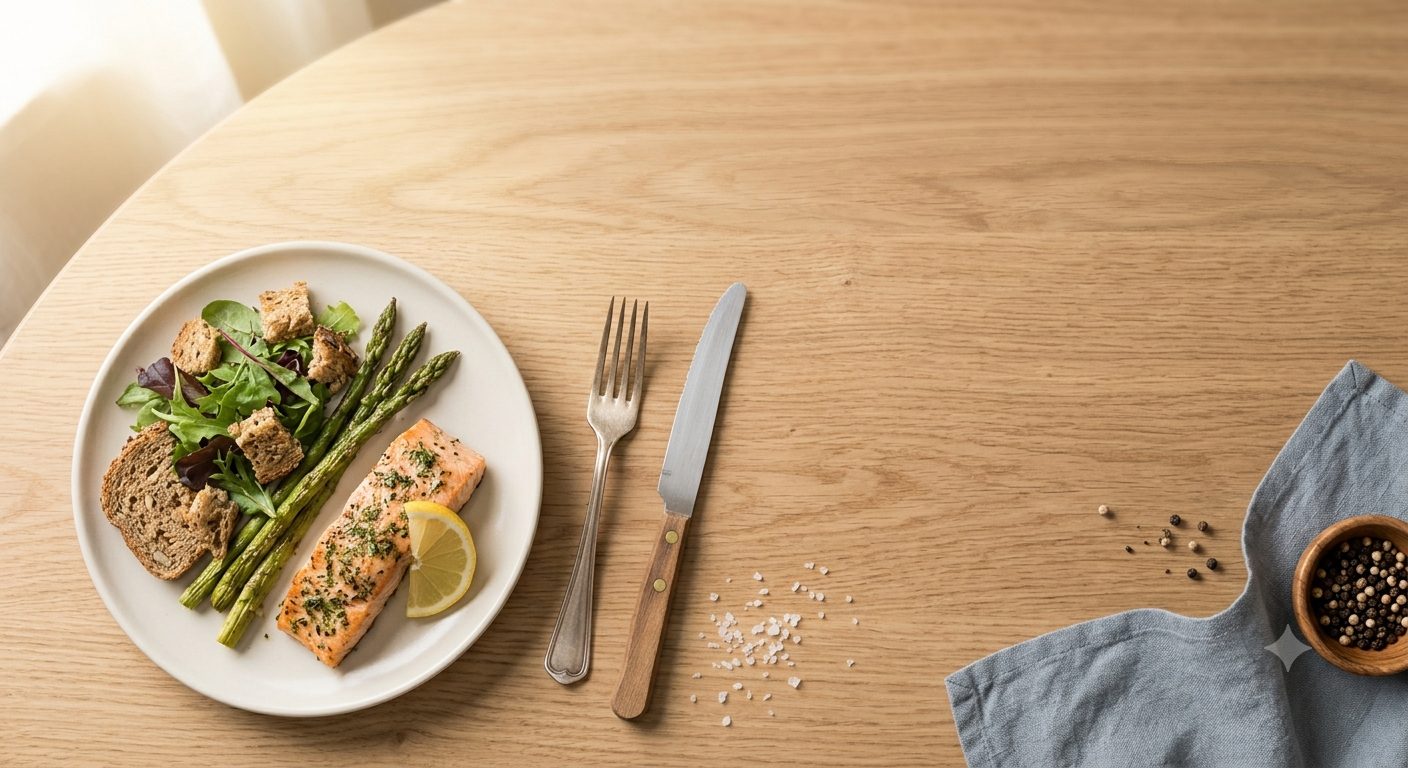
Intuitive eating: how to lose weight without dieting, counting, or bans
After years of restrictive diets, calorie counting, and food bans, more and more people are turning to a completely different approach: intuitive eating. Instead of external rules (“no more than X calories,” “no carbs after 6pm”), the basic principle is to relearn how to listen to the body’s natural signals — hunger, fullness, cravings — that most diets suppress or ignore entirely.
What intuitive eating is
Intuitive eating is a framework developed by dietitians Evelyn Tribole and Elyse Resch in the 1990s, based on 10 principles, including:
- Reject the diet mentality — no rigid rules about what, how much, or when you can eat
- Honor your hunger — eat when you’re physically hungry, not at artificially fixed times
- Make peace with food — no food is completely forbidden
- Challenge the “food police” — the internal voice that judges food choices as “good” or “bad”
- Feel your fullness — notice when you’re satisfied, not just full
- Honor your health with gentle nutrition — nutrition and pleasure coexist, they don’t exclude each other
Why it emerged as a reaction to traditional diets
Long-term studies consistently show most restrictive diets fail within 1-5 years — not from lack of willpower, but because severe restriction triggers biological compensation mechanisms (increased hunger, slowed metabolism) that make maintenance nearly impossible long-term. See also why diets don’t work and the yo-yo effect.
Intuitive eating doesn’t promise fast weight loss — it promises a healthier relationship with food, which, for many people, indirectly eliminates compulsive and restrictive eating, leading to more stable weight long-term, even if the process is slower and less predictable than a structured diet.
How to recognize real hunger and fullness
The hunger/fullness scale, from 1 to 10, is the central tool:
- 1-2: Extreme hunger, dizziness, irritability
- 3-4: Clear hunger, stomach growling
- 5-6: Neutral — neither hungry nor full
- 7-8: Comfortably full
- 9-10: Overfull, discomfort
The goal is to start meals at 3-4 and stop at 7-8, not 9-10. Sounds simple, but requires practice after years of eating at fixed times regardless of the body’s real signals, or ignoring fullness because of previous restrictions that created fear of hunger.
Intuitive eating vs. having no control at all
The most common misunderstanding: intuitive eating doesn’t mean “eat anything, anytime, without thought.” The initial stages, especially for someone coming from a long history of restrictive diets, often involve a “habituation” phase — unconditional permission for previously forbidden foods, which can temporarily lead to overconsumption of those foods, until the initial fascination fades and choices naturally become more balanced.
This phase can be uncomfortable and counterintuitive for someone used to strict external control, but research shows it’s a normal and transitional part of the process for most people.
Who intuitive eating suits
Works well for:
- People with a long history of yo-yo dieting, frustrated by repeated restriction-failure cycles
- People with tendencies toward emotional eating or a conflicted relationship with food
- People seeking very long-term sustainability, not fast results
Less suitable or needs adaptation for:
- People with medical conditions requiring strict dietary control (untreated diabetes, certain kidney diseases)
- Performance athletes with very specific short-term nutritional needs
- People with active eating disorders — in this case, guidance from a specialist is essential, not self-applying the principles
How to combine intuitive eating with weight loss goals
There’s real tension in the original concept — “pure” intuitive eating doesn’t explicitly aim for weight loss, but for peace with food. But many practitioners report natural weight loss as a side effect, as eliminating compulsive eating and emotional overeating reduces excess caloric intake without conscious restriction.
If you have a clear weight loss goal, a hybrid approach can work: apply the hunger/fullness listening principles, but stay aware of overall food quality choices (adequate protein, fiber, vegetables), without obsessively counting calories.
Practical steps to start
1. Remove the “good” or “bad” label from foods, at least mentally. All foods have a place.
2. Eat without distraction (no phone, no TV) for at least one meal a day, to more clearly observe hunger and fullness signals.
3. Pause halfway through the meal and ask yourself: “How hungry am I still?” Not to force yourself to stop, but to reconnect with the physical sensation.
4. Allow yourself previously “forbidden” foods, in a controlled setting, observing how you feel physically afterward — not from guilt, but from informative curiosity.
5. Be patient with the process. Unlearning years of external rules takes months, not weeks.
Frequently asked questions
Does intuitive eating lead to weight gain?
Not inherently. Long-term studies show intuitive eating practitioners have, on average, a more stable BMI and fewer binge eating episodes than those following repeated restrictive diets.
Can I combine intuitive eating with calorie counting?
They’re philosophically in tension — intuitive eating rejects strict external counting. But a gradual approach, moving from strict counting to awareness without counting, is possible and frequently recommended by dietitians.
How long does it take to learn intuitive eating?
Varies enormously, but most sources mention 6 months to 2 years for full internalization, especially after a long history of restrictive dieting.
Do I need a specialist for intuitive eating?
Not mandatory, but a dietitian or psychologist specialized in eating can significantly speed up the process, especially if there’s a history of eating disorders or a complicated relationship with food.
Intuitive eating isn’t for everyone and doesn’t promise fast results, but for those stuck in repeated cycles of failed diets, it offers an alternative based on reconnecting with the body’s natural signals, not constant external control.
⚕️ The information in this article is for educational purposes and does not replace the advice of a doctor, dietitian, or psychologist specialized in eating.