


Why losing weight is harder after 40: what changes hormonally and what you can control
“After 40, your metabolism goes into freefall and you can’t lose weight like before.” It’s a phrase you hear everywhere, repeated with resignation. And it’s true that, for many people, weight goes on more easily and comes off more slowly after a certain age. But the real reasons are different from what most people think — and the good news is that almost all of them are things you can influence.
Let’s separate myth from reality, and see what you can concretely control after 40.
The big myth: “metabolism crashes at 40”
Let’s start with the biggest surprise, supported by recent research. A large study published in the journal Science measured the metabolism of over 6,000 people, from babies to older adults. The conclusion contradicted everything we believed: metabolism remains stable between approximately 20 and 60 years of age. There’s no sudden crash at 40.
So if it’s not metabolism that’s to blame, why does weight loss get harder? Because other things change — less spectacular, but real, and importantly, largely within your control.
What actually changes after 40
You lose muscle mass (gradually). After 30–40, we naturally begin to lose muscle if we do nothing to preserve it — a process called sarcopenia. And muscle is the tissue that burns the most calories at rest. Less muscle = a slightly lower calorie requirement. That means, eating the same as at 25, you gradually slide into surplus.
You move less. At 40+, life is often more sedentary: desk work, car, responsibilities, fatigue. What decreases isn’t just intentional exercise, but also the “background movement” of the day (walking, climbing stairs, spontaneous activity). Less movement = fewer calories burned, without you noticing.
Hormones shift. In women, perimenopause and menopause bring a decline in oestrogen, which promotes fat deposition in the abdominal area and can affect appetite and sleep. In men, testosterone declines slowly, making it harder to preserve muscle mass. Insulin sensitivity also tends to decrease with age — see the article on insulin resistance.
You sleep worse. Sleep often deteriorates with age, and poor sleep increases appetite and makes good decisions harder.
What you can control (the good news)
Notice one thing: almost none of the factors above are “set in stone.” Here’s what matters most after 40:
- Strength training. It’s the most important change. Lifting weights (or bodyweight exercises) preserves and builds muscle, directly counteracting sarcopenia. You don’t need to become a bodybuilder — two to three times per week is enough to change everything.
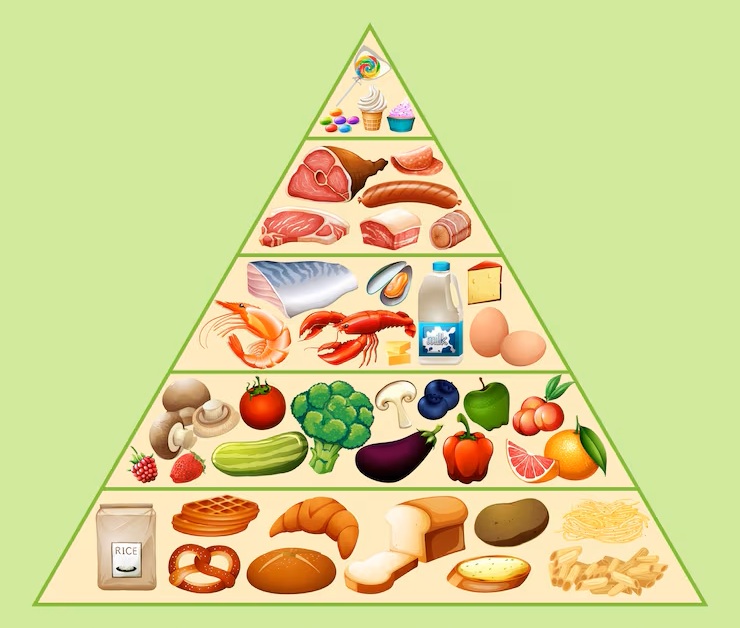
- More protein. After 40, the body needs more protein to maintain muscle. Include a protein source at every meal (eggs, fish, lean meat, cottage cheese, yogurt, legumes).
- Background movement. Not just sport, but daily steps. A simple daily walking goal does more than you’d think.
- Sleep and stress. We ignore them, but they matter enormously at this age for appetite and abdominal fat.
- A realistic calorie deficit. Your requirement is slightly lower than at 25, so adjust portions to your current reality. Recalculate with the calorie calculator.
Why “the diets that worked at 25” no longer work
Many people try at 45 exactly what worked at 25 — and are puzzled when it doesn’t work anymore. The difference isn’t that you’re “broken”; it’s that your needs have changed. At 25 you could lose weight by cutting just a little; now, protein, strength, and consistency matter more. Starvation works even worse than in youth, because it accelerates muscle loss — exactly what you don’t want. Losing weight after 40 requires a smarter approach, not a harsher one.
Frequently asked questions
Is it really harder to lose weight after 40?
Slightly harder, but not because of a metabolism “crash.” It’s about less muscle, less movement, and hormonal changes — all of which can be influenced. Many people lose weight successfully after 40, 50, and even later.
Why am I gaining fat in my belly now, when I didn’t before?
In women, the decline in oestrogen around menopause redistributes fat toward the abdomen. In both sexes, muscle loss and declining insulin sensitivity contribute. Strength training, protein, and movement help directly.
Isn’t strength training dangerous at this age?
On the contrary — it’s one of the most beneficial things for health after 40, for muscles, bones, and metabolism. Start gently, with correct form, ideally with some guidance at first, but don’t avoid it.
Do I need to eat much less to lose weight?
Not “much less,” but somewhat less than in your younger years, because your requirement has decreased slightly. More important than just cutting drastically is WHAT you eat (protein, fibre) and preserving muscle through movement.
How much protein do I need after 40?
Needs increase compared to younger years, precisely to preserve muscle. A practical rule is a good protein source at every meal (eggs, fish, lean meat, cottage cheese, Greek yogurt, legumes). You don’t need to overdo it with expensive shakes — ordinary food, distributed throughout the day, is sufficient for most people.
Does menopause make weight loss impossible?
Not impossible, but harder and different. The redistribution of fat toward the abdomen and changes in appetite and sleep complicate things, but strength training, protein, sleep, and a realistic deficit remain effective. For troublesome symptoms or treatment options, speaking with a gynaecologist or endocrinologist is the right step.
Is cardio or strength training better after 40?
Both help, but if you had to choose one, strength training takes priority at this age, because it preserves muscle — exactly the tissue you’re naturally losing and which supports your metabolism. Ideally combine both: strength 2–3 times per week, plus walking and background movement.
Age is not an excuse and not a sentence. “The broken metabolism at 40” is largely a comfortable myth — the reality is that you’ve lost a little muscle and you’re moving less, and both can be addressed. With strength training, protein, movement, and patience, losing weight after 40 is perfectly possible; it just requires a strategy suited to your age, not resignation.
⚕️ This information is for educational purposes only and does not replace medical advice. For hormonal changes (menopause, thyroid, etc.) or before starting an exercise programme, consult a specialist.