

How to increase fibre intake at every meal without changing everything you eat
Everyone knows they should eat more fibre. The problem is that advice usually stops at “eat more vegetables” — about as useful as “be healthier.” This article is the exact opposite: no theory, just small, concrete changes you make to the meals you’re already eating, to go from the ~12 grams of fibre a day most people consume to the recommended 25–30 grams, without reinventing your diet.
The core idea: you don’t need to change WHAT you eat, but to add or swap something small at each meal. Small adjustments, repeated daily, make all the difference.
Why fibre matters for weight loss
Before tactics, briefly why it’s worth the effort. Fibre keeps you full for longer, slows sugar absorption (fewer sudden cravings), and feeds the good bacteria in your gut. In practice, it helps you naturally eat less without feeling like you’re starving — a huge advantage when you’re in a calorie deficit. More on the phenomenon in the article about fibermaxxing.
Breakfast: this is where you win most easily
The typical breakfast — white bread with butter and jam, or a quick pastry — contains almost zero fibre. It’s the meal with the greatest potential for improvement:
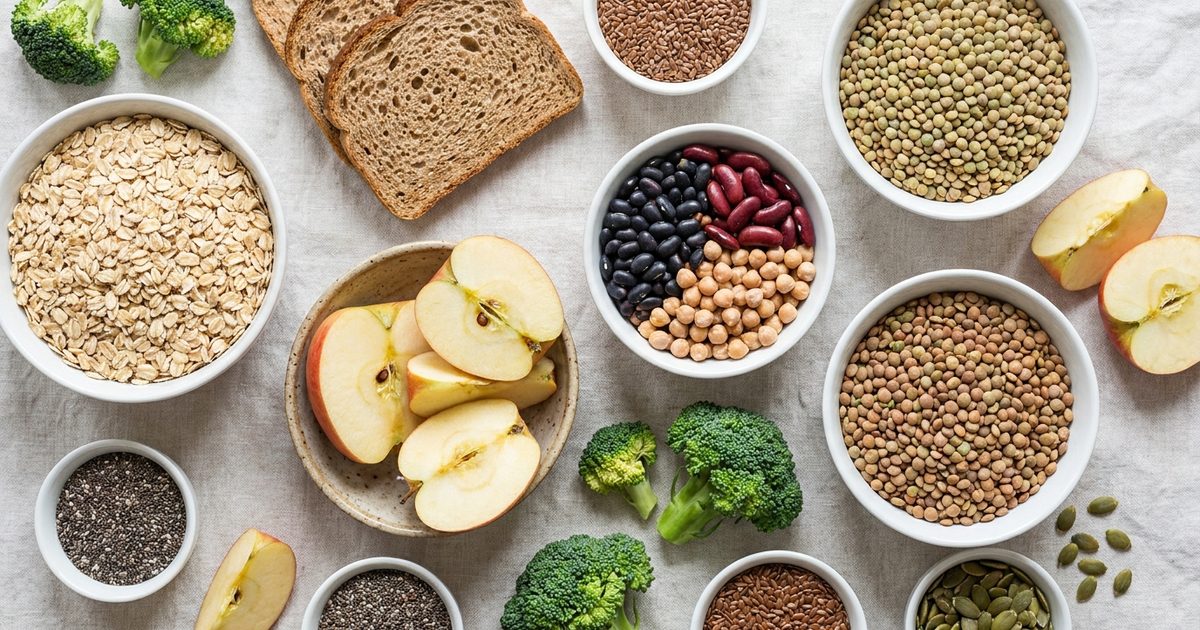
- Switch white bread for wholegrain or rye. From ~0.5 g to ~3 g of fibre per slice, with zero effort.
- Add a tablespoon of ground flaxseeds or chia to yogurt or a smoothie. ~5 g of fibre, neutral taste, you won’t even notice them.
- Switch to oats. A serving of oats with fruit is one of the best morning fibre sources (~5 g, plus oats’ own satiety effect).
- Add a piece of fruit with the skin alongside whatever else you eat — an apple, a pear (~4 g each).
Just a well-thought-out breakfast can deliver 10–12 g of fibre, meaning almost half the daily requirement.
Lunch: add a “heavy” fibre source
At lunch, the goal is to include a concentrated fibre source, not just green garnish:
- Add one or two tablespoons of legumes to your salad or soup — beans, lentils, or chickpeas deliver 7–8 g of fibre from a small portion.
- Choose vegetable or lentil soups instead of clear broths. More filling, more fibre.
- Leave the skin on potatoes (well washed). A good portion of the fibre sits exactly in the skin, which we usually throw away.
- Double the vegetables on your plate and halve the white rice or pasta side dish.
Dinner: roasted vegetables, no fuss
In the evening, the simplest trick is a tray of oven-roasted vegetables: cabbage, cauliflower, broccoli, peppers, zucchini, onion. Chop them, toss with a little oil and seasoning, 25 minutes in the oven, and you have a side dish with 5–8 g of fibre alongside any protein source. Almost zero effort, practically makes itself.
Another option: a side dish of lentils or beans instead of white rice, alongside a piece of fish or chicken.
Snacks: change the reflex
Snacks are a missed fibre opportunity for most people. The “biscuit or pretzel” reflex can be easily replaced:
- An apple or a pear (with the skin) — ~4 g.
- Raw carrots or celery with hummus — fibre from both.
- A handful of almonds or walnuts — ~3 g, plus healthy fats and satiety.
- Plain popcorn (not the buttered and sugared kind) — a surprisingly fibre-rich snack.
The golden rule: increase gradually and drink water
Here’s the only mistake that ruins everything. If you suddenly go from 12 to 30 grams of fibre overnight, your gut isn’t ready, and the result is bloating, gas, and discomfort — after which you abandon the idea. The solution: increase gradually, over 2–3 weeks, adding a new source every few days.
And, crucially, drink more water. Fibre absorbs water to do its job; without enough liquid, the satiety effect turns into constipation. If you increase fibre, increase water too — see the water calculator for your requirement.
Frequently asked questions
How quickly will I see results if I eat more fibre?
Better satiety appears almost immediately, within a few days. Benefits for transit and more stable cravings are felt in 1–2 weeks, as the gut adapts.
Can I take a fibre supplement instead of changing my meals?
Supplements can help as an addition, but they don’t replace fibre from whole foods, which comes with water, vitamins, and a chewing sensation that matters for satiety. Better to build the foundation from real food and use a supplement only if you still can’t reach the requirement.
Why do I get bloated when I eat more fibre?
Most often because you increased the amount too quickly or aren’t drinking enough water. Increase gradually and stay well hydrated — within a few weeks, the discomfort almost completely disappears.
Soluble or insoluble fibre — which matters?
You need both, and a varied diet gives you them naturally. Soluble fibre (oats, beans, apples) helps more with satiety and blood sugar; insoluble fibre (whole grains, vegetable skins) helps transit. You don’t need to count them separately — variety takes care of it.
Do I have to count grams of fibre every day?
No. Just like with calories, obsessive counting isn’t necessary. It’s enough to apply a few reflexes — wholegrain instead of white bread, a legume source at lunch, vegetables at dinner, fruit as a snack — and you’ll naturally reach the requirement. Optionally count for a day or two at the start, just to get an idea of where you’re starting from and where your biggest gaps are.
Do children and older adults need the same amount of fibre?
Requirements vary with age and sex, but the principle is the same: most people, regardless of age, eat too little fibre. In older adults, fibre helps a lot with transit, but it’s even more important to increase gradually and drink enough water to avoid discomfort.
You don’t need a special diet to double your fibre — you need five or six new reflexes applied to your everyday meals. Start with breakfast — it’s the easiest win — and gradually add something to each meal. Within two weeks you’ll have gone from “too little fibre” to “exactly the right amount,” without giving up anything you enjoy.
⚕️ This information is for educational purposes only and does not replace the advice of a doctor or nutritionist.