

Plant-Based
Planetary Health Diet
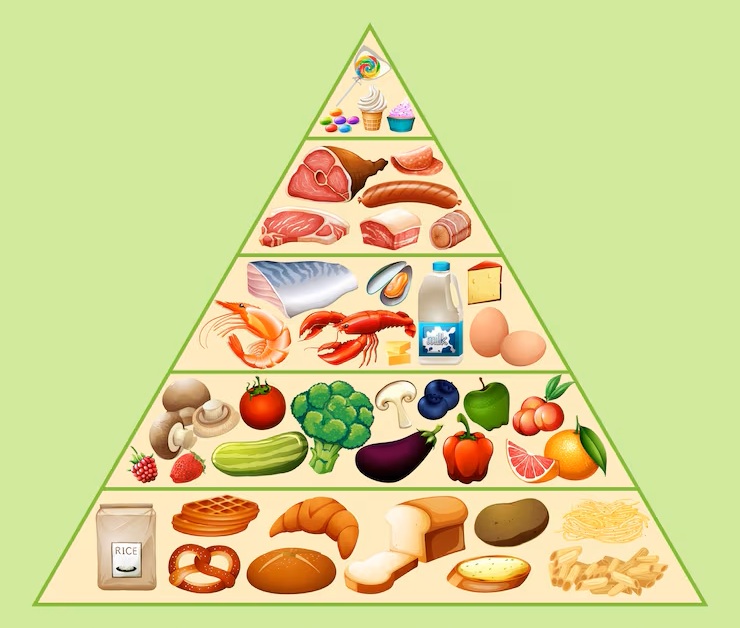
Half the plate in vegetables and fruit, a quarter in whole grains, a quarter in plant proteins (legumes, nuts). Very small amounts of animal products. Designed to be both healthy and sustainable for the planet.
The Planetary Health Diet is a dietary framework developed by the EAT-Lancet Commission — a consortium of 37 scientists from 16 countries — and published in 2019. Its goal is double: to define a diet that is both optimal for human health and compatible with planetary ecological limits.
The formula: half the plate in vegetables and fruit, a quarter in whole grains, a quarter in plant proteins (legumes, nuts, seeds). Very small amounts of animal products are allowed — approximately 100 g of red meat per week, one egg per day, small portions of fish and dairy.
It is not a commercial diet programme but a scientific reference for nutrition and food-systems policy. For individuals, it represents a guide towards a predominantly plant-based diet that is nutritionally complete without requiring complete elimination of animal products.
History and origin
The EAT-Lancet Commission was formed in 2017, co-chaired by Harvard professor Walter Willett and Norwegian researcher Johan Rockström. The commission’s mandate was to define, for the first time with scientific rigour, a global diet that could simultaneously achieve two goals: protect human health and keep the food system within planetary boundaries (biodiversity, water, land use, climate).
The result was published in The Lancet in January 2019 in a landmark 50-page paper: “Food in the Anthropocene: the EAT–Lancet Commission on healthy diets from sustainable food systems.” The report proposed specific quantitative targets for each food group based on evidence from epidemiology, environmental science and food systems modelling.
The response was significant — and divided. Public health and environmental organisations praised the scientific rigour and ambition. Critics from the meat and dairy industries, as well as from some low-income countries, challenged the recommendations, arguing that the model disproportionately affected cultural food traditions and could worsen food insecurity in regions where animal products are important sources of affordable micronutrients. The commission acknowledged this tension in follow-up responses. The debate around the report continues and reflects the broader tension between global dietary transition recommendations and diverse local realities.
+ What you eat and what you avoid
✓ What you eat
- Vegetables and fruit (half the plate)
- Whole grains (25%): wheat, rice, corn, oats
- Plant proteins (25%): legumes, nuts, seeds
- Unsaturated plant oils
- Small amounts of animal protein: meat (max ~28 g/day), fish (~28 g/day), eggs (~1.5/week), dairy (~250 g/day)
✕ What you avoid
- Red meat in large quantities — the diet allows approx. 100 g of red meat per week
- Processed meat
- Sugar (max 31 g/day)
- Refined grains and processed foods
+ Sample one-day menu
+ Pros and cons
Pros
- Based on a rigorous scientific commission (37 scientists, 16 countries)
- Balances human health and planetary sustainability
- Nutritionally complete
- Does not eliminate animal products — just significantly reduces them
Cons
- Very restrictive on red meat — culturally difficult for many populations
- The specific quantities require significant dietary changes for most people
- Access to legumes and diverse plant foods varies by region and income
+ ⚠️ Who should avoid this diet
- No major medical contraindications for healthy adults
- In low-income countries, recommended reductions in animal products may worsen nutritional deficiencies — a criticism acknowledged by the EAT-Lancet Commission itself
Indicative list. Before starting any diet, especially if you have a medical condition, consult a doctor or nutritionist.
Întrebări frecvente
Can I eat meat on the planetary health diet?
Yes — but very little. The recommendation is approximately 100 g of red meat per week, which is much less than average Western consumption. For perspective: a typical beef burger patty weighs about 100 g. Daily portions of animal proteins should be small — the focus is on plant proteins.
Is the planetary health diet vegan?
No — it includes small amounts of meat, fish, eggs and dairy. But it requires dramatic reductions in animal products, especially red and processed meat. Many people would describe it as 'mostly plant-based'.
What is the EAT-Lancet Commission?
An international scientific consortium of 37 researchers from 16 countries, assembled by the EAT Foundation and The Lancet journal, which published a comprehensive report in 2019 on the food systems necessary to sustainably feed 10 billion people by 2050 while staying within planetary boundaries.