
Breakfast for weight loss: 7 filling ideas that keep you full until lunch
Breakfast is the meal where the whole day is won or lost. A bad breakfast — a croissant on the go, white bread with jam, a pastry with a sugary coffee — leaves you hungry within an hour and craving sweets until the evening. A good one keeps you full until lunch and sets the day on the right track. And no, it doesn’t need to be complicated, expensive, or laden with exotic ingredients.
Here are seven breakfast ideas for weight loss, all made from foods you can find in any supermarket, all under approximately 350 calories, and all built to fill you up.
Why what you eat in the morning matters
Before the recipes, the principle. A good weight loss breakfast has two characteristics: it’s rich in protein and it contains fibre. Protein fills you up more than anything else and reduces cravings throughout the day; fibre slows digestion and flattens the blood sugar spike that would otherwise crash you at 11 am.
The typical breakfast — white bread, jam, maybe some deli meats — is the exact opposite: lots of refined carbohydrates, little protein, almost zero fibre. That’s why you get hungry quickly. Shifting toward protein and fibre means the same morning keeps you full for hours longer, without eating more.
7 breakfast options (under 350 calories)
1. Vegetable omelette. Two to three eggs beaten with tomatoes, peppers, and spinach. The perfect classic: plenty of protein, filling, cheap. Add a slice of wholegrain bread if you need extra energy. ~250–300 kcal.
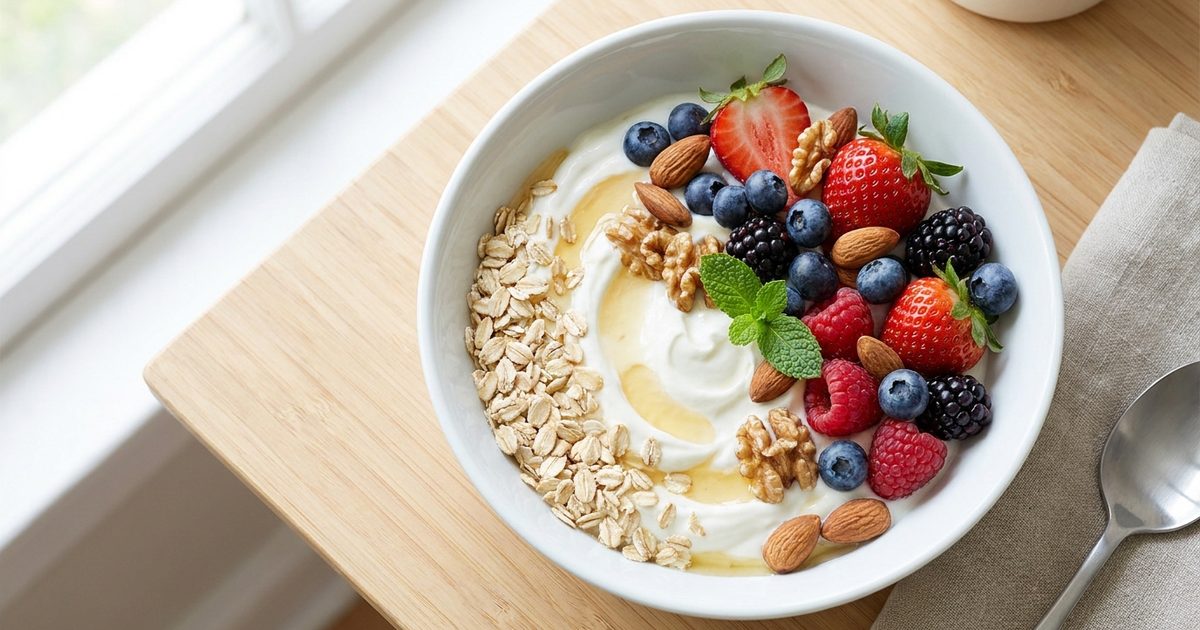
2. Greek yogurt with oats and fruit. 150 g Greek yogurt, two tablespoons of rolled oats, a handful of berries or a sliced apple. Creamy, naturally sweet, packed with protein and fibre. ~300 kcal.
3. Cottage cheese with tomatoes and cucumber. Maximum lean protein, minimum calories, zero cooking. A slice of rye bread alongside. ~250 kcal.
4. Boiled eggs with avocado. Two boiled eggs and half an avocado on wholegrain bread. Healthy fats plus protein — keeps you full for hours. ~330 kcal.
5. Oat porridge with cinnamon and nuts. Rolled oats cooked in milk or water, with cinnamon and a small handful of walnuts. Filling comfort food, rich in fibre. ~320 kcal.
6. Cheese omelette with spring onion. A bolder-tasting variation, still egg-based, with a little feta or similar cheese for flavour. ~300 kcal.
7. Filling smoothie (to eat, not gulp down). Yogurt, a tablespoon of rolled oats, fruit, and a tablespoon of flaxseeds. Watch the portion — smoothies can become calorie-heavy easily. ~300 kcal.
Notice the pattern: eggs, yogurt, cottage cheese, oats — protein and fibre, repeated. No expensive ingredients, no powders.
What to avoid at breakfast (if you want to lose weight)
A few common traps that sabotage your morning:
- Sweetened breakfast cereals. Usually sugar in disguise. They leave you hungry quickly.
- Fruit juice. Many liquid calories, no satiety. Better to have a whole fruit.
- Coffee with syrup, cream, and sugar. Can bring 200–300 calories without you noticing.
- Pastries. Croissants, filled buns, pies — refined carbohydrates and fat, zero satiety.
”But what if I’m not hungry in the morning?”
You’re not obligated to eat breakfast. The myth that it’s “the most important meal of the day” is more marketing than science. If you’re not hungry in the morning and feel fine skipping it, that’s perfectly acceptable — in fact, that’s the basis of intermittent fasting. What matters is not compensating later by eating double. Breakfast helps if it keeps you full and prevents you from nibbling; if you skip it but control the rest of the day, that’s equally fine.
Frequently asked questions
Do I have to eat breakfast to lose weight?
No. What counts is total calories for the day, not whether you eat in the morning. If breakfast helps you avoid nibbling all day, eat it; if you do better skipping it, that’s also a valid option.
Why do I get hungry an hour after eating breakfast?
Almost certainly because your breakfast is rich in refined carbohydrates and low in protein — white bread, jam, sweet cereal. Switch to eggs, Greek yogurt, or cottage cheese and you’ll stay full much longer.
How many calories should breakfast have?
There’s no fixed number — it depends on your total requirement. As a reference, a breakfast of 250–400 calories, rich in protein, works well for most people who want to lose weight.
Does fruit at breakfast make you gain weight?
No. Whole fruit is an excellent choice — it has fibre, water, and vitamins, and is hard to overeat. Just be careful with juices and dried fruit, which are far more calorie-concentrated.
Can I eat bread at breakfast if I want to lose weight?
Yes, in a reasonable portion and, ideally, wholegrain or rye. Bread doesn’t make you gain weight on its own — total daily calories matter. What makes the difference is what you put on it (cottage cheese and tomatoes vs. lots of butter and jam) and how much you eat, not the bread itself.
How much does protein at breakfast matter?
A great deal. A protein-rich breakfast (eggs, Greek yogurt, cottage cheese) fills you up more and reduces cravings throughout the day, helping you eat less overall — effortlessly. It may be the single most impactful change you can make to your first meal.
Is it better to eat early or can I delay breakfast?
For weight loss, the exact time doesn’t matter — it’s the daily total that counts. You can eat at 7 or at 10, or skip and eat for the first time at lunch. Choose what keeps you full and away from nibbling.
A good weight loss breakfast isn’t complicated science: protein, fibre, ordinary accessible foods, no hidden sugar. Pick two or three options from above that you enjoy, rotate them, and you’ll notice that the rest of the day becomes much easier to control — without hunger and without cravings that derail you.
⚕️ This information is for educational purposes only and does not replace the advice of a doctor or nutritionist. Calorie values are approximate.