
What to eat in the evening on a diet (and why dinner doesn't make you gain weight)
“Don’t eat anything after 6:00 pm” is probably the most repeated weight loss advice around. It sounds disciplined, it sounds healthy — and it’s largely a myth. Dinner doesn’t make you gain weight because of the time you eat it, but because of what and how much you put on the plate. The real problem in the evening isn’t the clock — it’s the fact that the evening is when most people eat uncontrollably: tired, in front of the TV, with snacks within reach.
Let’s clear up the myth and then look at what you can concretely eat in the evening, while on a diet, to feel full without ruining your deficit.
Why the time doesn’t matter (but behaviour does)
Your body doesn’t have a switch that, after sunset, turns food into fat. Weight loss depends on total calories for the day, not on the time of the last meal. If you’re within your requirement, you can eat a normal dinner without gaining weight — even with a portion of carbohydrates.
Where does the myth come from? From correlation, not causation. People who gain weight “from eating in the evening” don’t experience it because it’s evening — but because in the evening they eat most poorly: a large plate after a day of semi-starvation, plus snacks — crisps, biscuits, chocolate — in front of the TV. If you accumulate 800 calories of snacks at 10 pm, you gain weight — but you would have gained it equally at lunchtime.
There is, however, a practical reason why a lighter dinner helps: if you eat too much in the evening, you sleep worse, and poor sleep increases your appetite the next day. So it’s not the time, but the portion size and quality that matter.
The rule for dinner on a diet
A good weight loss dinner has three characteristics: it’s rich in protein (fills you up and protects muscle mass overnight), has volume from vegetables (fills you up with few calories), and is moderate in fats and starchy foods. In other words: a protein source + plenty of vegetables + a small side dish if you want. That keeps you full until bedtime without unnecessary calories.
7 dinner ideas under 400 calories
All made from accessible ingredients, ready in 15–25 minutes:
- Grilled chicken breast with a large salad and a tablespoon of olive oil. The classic that never fails. ~350 kcal.
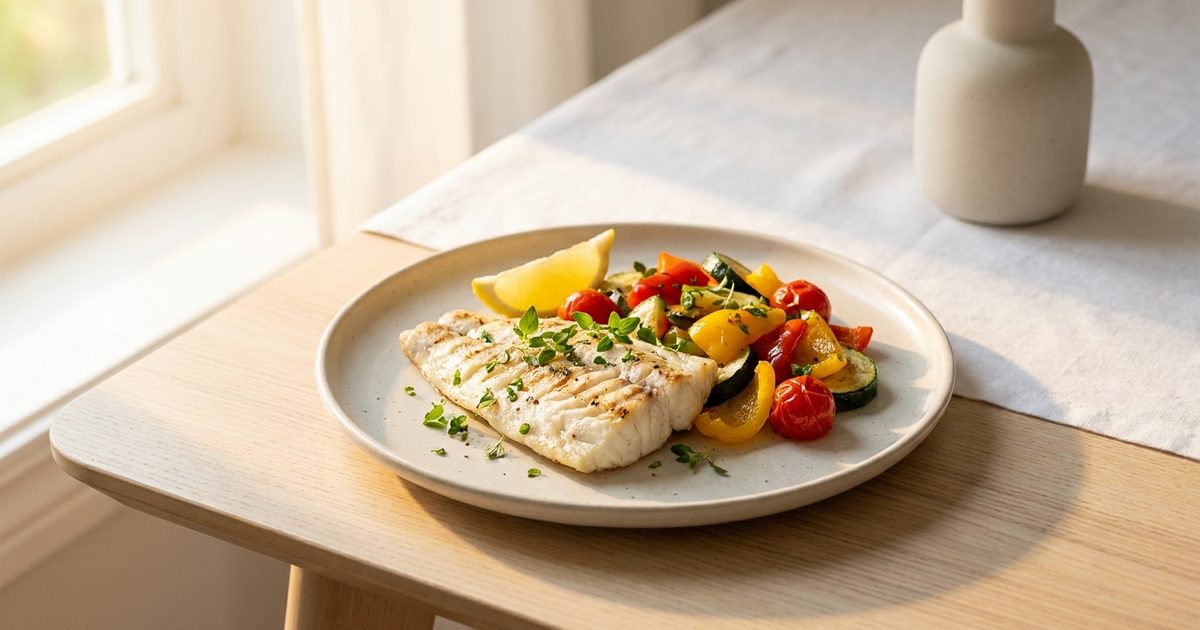
- Baked fish with vegetables (zucchini, peppers, tomatoes). Lean protein, plenty of food. ~350 kcal.
- Evening omelette with vegetables. Two eggs with spinach, tomatoes, and mushrooms. Quick and filling. ~280 kcal.
- Cottage cheese with cucumber and radishes. Lots of protein, few calories, no cooking. ~250 kcal.
- Cream vegetable soup with a boiled egg on the side, so it’s not just vegetables. ~300 kcal.
- Tuna salad. A can of tuna in its own juice, lettuce, a little corn, tomatoes. ~320 kcal.
- Bunless “burger” — a lean meat patty on a bed of lettuce, with garlic yogurt. ~380 kcal.
Notice the pattern: protein + vegetables, without much bread, without frying, without fatty sauces. No recipe leaves you hungry, yet all are under 400 calories.
What to avoid in the evening (not because it’s evening)
Not because of the hour, but because these are caloric traps that, consumed when you’re tired and relaxed, easily slip out of control:
- TV snacks — crisps, biscuits, salted peanuts, chocolate. This is where most evening calories hide.
- “Recovery” portions — if you skipped meals all day, you arrive ravenous in the evening and eat double. Eat balanced throughout the day so you don’t end up there.
- Alcohol — a glass or two of wine or beer adds 150–300 liquid calories that don’t fill you up at all.
- “Just a small dessert” that becomes half a bar of chocolate.
Frequently asked questions
Can I really eat after 6:00 pm and still lose weight?
Yes. The time doesn’t matter for weight loss — total daily calories do. You can have dinner at 8:00 pm or 9:00 pm and lose weight, as long as you’re within your requirement.
Can I eat bread or carbohydrates in the evening?
Yes, in moderation. A small portion of carbohydrates (a slice of wholegrain bread, a little rice) won’t make you gain weight if you’re within your calorie budget. The evening carbs myth is exactly that — a myth.
What should I do if I’m hungry before bed?
A small, protein-rich snack is the best choice: a yogurt, some cottage cheese, a boiled egg. It fills you up without many calories and doesn’t disrupt your sleep the way a dessert would.
Is it bad to go to bed right after eating?
It won’t make you gain weight, but it can cause digestive discomfort or reflux in some people. Ideally, leave an hour or two between dinner and sleep — for comfort reasons, not weight loss.
Why do I feel most hungry in the evening?
A few causes combine. After a day of work you’re tired and willpower is lower, and if you’ve eaten too little throughout the day, your body demands recovery in the evening. Add to that the habit of associating TV relaxation with snacking. The solution isn’t to fight willpower in the evening — it’s to eat sufficiently and in a balanced way throughout the day, so you don’t arrive hungry and vulnerable at the weakest moment.
Does a protein-rich evening snack help with sleep?
For many people, yes. A small, protein-rich snack (yogurt, cottage cheese, an egg) curbs hunger without overloading digestion and without sugar spikes that can disturb sleep, as sweets can. The key is a small portion — a snack, not a second dinner.
Forget the clock terror and focus on what matters: a dinner with protein and vegetables, in a reasonable portion, without uncontrolled evening snacking. That keeps you full, helps you sleep well, and doesn’t sabotage your weight loss — regardless of what time you eat it. Instead of imposing a rigid rule about 6 pm, make yourself a better rule: make your last meal one you put on your plate consciously, not one you nibbled at distractedly in front of a screen.
⚕️ This information is for educational purposes only and does not replace the advice of a doctor or nutritionist.